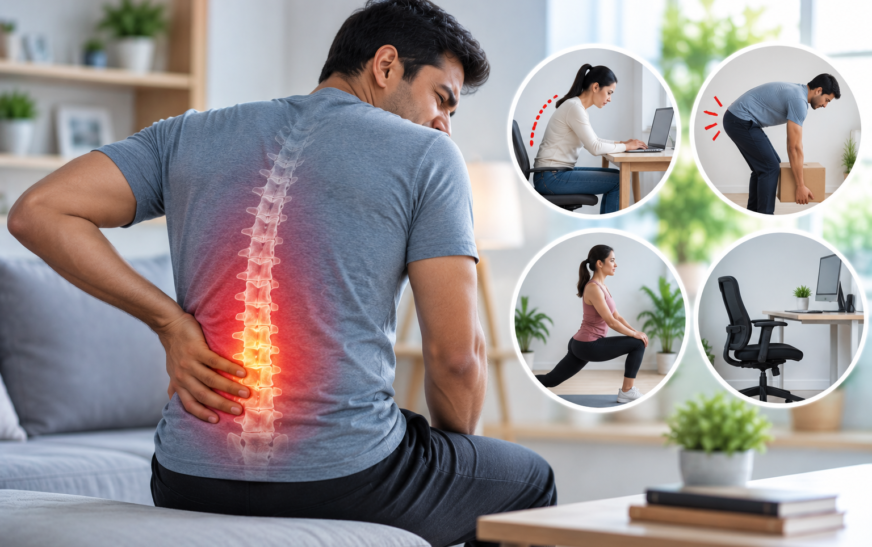
Back pain is one of the most common health concerns and can affect people of all ages. It may develop after lifting something heavy, sitting for long periods, exercising incorrectly, or simply due to changes in the muscles, joints, and spine. Most back pain improves with appropriate care, but understanding its possible causes and taking simple preventive steps can help protect your back and maintain mobility.
Common Causes of Back Pain
Muscle or ligament strain is a frequent cause of back pain. Lifting heavy objects, sudden movements, repetitive activities, or poor physical conditioning can place extra stress on the muscles and supporting tissues of the back. Long periods of sitting, particularly with poor posture, can also contribute to discomfort and stiffness.
Other causes include disc-related problems, arthritis, spinal changes, injuries, and conditions affecting the bones or joints. Sometimes back pain can be related to problems outside the spine, such as certain kidney or abdominal conditions. This is why persistent or unusual pain should not always be assumed to be a simple muscle strain.
How to Prevent Back Pain
Maintaining an active lifestyle can help support the muscles that protect your spine. Regular walking, stretching, and appropriate strength exercises can improve flexibility and core strength. If you spend a lot of time sitting, take regular movement breaks and adjust your workstation so that your back and neck remain comfortably supported.
Good lifting techniques are also important. When lifting an object, keep it close to your body, bend your knees, and avoid twisting your back while carrying the load. Maintaining a healthy body weight, getting adequate sleep, and avoiding prolonged inactivity can further support overall back health.
When Should You See a Doctor?
Occasional mild back discomfort may improve with rest and gentle movement, but medical advice is recommended when pain is severe, persistent, repeatedly returning, or interfering with normal activities. Pain that follows a significant injury should also be assessed.
Certain symptoms require prompt medical attention. These include back pain accompanied by weakness or numbness in the legs, difficulty controlling the bladder or bowel, loss of sensation around the groin, unexplained fever, or significant unexplained weight loss. Sudden severe pain or pain associated with other concerning symptoms should also be evaluated.
Keeping Your Back Healthy
Preventing back pain does not require avoiding movement. In fact, staying appropriately active is often an important part of maintaining a healthy back. Build strength gradually, maintain good movement habits, take breaks from prolonged sitting, and use safe techniques when lifting or exercising.
If back pain continues despite simple measures or begins affecting your everyday life, consult a qualified healthcare professional. Early assessment can help identify the underlying cause and guide appropriate treatment, allowing you to return to comfortable movement and daily activities safely.
Medical Disclaimer: This article is intended for general health education only and is not a substitute for professional medical diagnosis, treatment, or advice. Persistent, severe, or unusual back pain should be evaluated by a qualified healthcare professional.