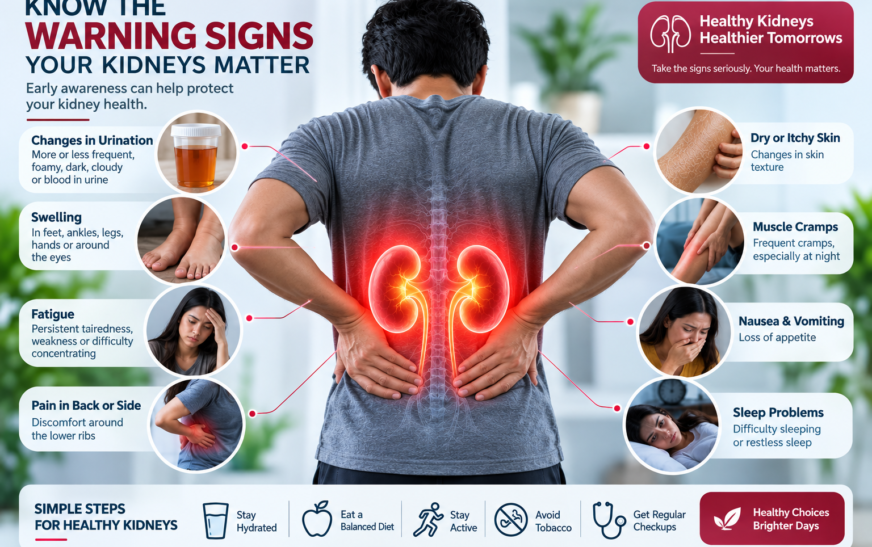
Your kidneys play an important role in keeping your body healthy. They filter waste and excess fluid from the blood, help maintain the right balance of minerals and fluids, and contribute to blood pressure regulation and other essential functions. Kidney problems can develop gradually, and in the early stages they may cause few or no noticeable symptoms. However, certain changes in your body may indicate that your kidneys need attention.
Common Warning Signs
One of the signs to watch for is a change in urination. You may notice that you are urinating more or less often than usual, particularly at night, or that your urine looks unusually foamy, dark, cloudy, or contains blood. Pain or burning while urinating can also indicate a urinary or kidney-related problem. Swelling in the feet, ankles, legs, hands, or around the eyes may occur when the kidneys are unable to remove excess fluid effectively. Some people may also experience persistent fatigue, weakness, or difficulty concentrating, as kidney problems can affect the body’s overall balance.
Pain in the back or side, particularly around the area beneath the ribs, can sometimes be associated with kidney problems. Kidney stones and certain infections may cause significant pain, while other kidney conditions may cause little or no discomfort. Additional symptoms can include nausea, vomiting, poor appetite, dry or itchy skin, muscle cramps, or changes in sleep patterns. These symptoms can have many other causes, so they should not automatically be assumed to indicate kidney disease. However, persistent or unexplained changes deserve proper medical evaluation.
When Should You See a Doctor?
It is important to speak with a healthcare professional if you notice persistent changes in urination, unexplained swelling, recurring pain in your back or side, blood in your urine, or ongoing fatigue. People with conditions such as high blood pressure or diabetes, as well as those with a family history of kidney disease, may benefit from regular kidney health checks as recommended by their healthcare provider. Simple tests, including blood and urine tests, can provide useful information about how well the kidneys are functioning.
Some symptoms require urgent medical attention. Severe pain, inability to urinate, blood in the urine, high fever with urinary symptoms, repeated vomiting, confusion, or sudden worsening of symptoms should be assessed promptly. Early evaluation can help identify the underlying cause and allow appropriate treatment to begin when necessary.
Protecting Your Kidney Health
Healthy daily habits can support kidney function and overall health. Staying adequately hydrated, eating a balanced diet, maintaining a healthy weight, staying physically active, avoiding tobacco, and limiting excessive salt intake can be beneficial. It is also important to manage blood pressure and blood sugar levels if they are elevated. Avoid taking pain medicines or other medications more frequently than recommended, and discuss regular or long-term medication use with your healthcare professional.
Kidney health is closely connected to your overall health, and many kidney problems can be managed more effectively when identified early. Paying attention to changes in your body and attending recommended health checkups can help protect your kidneys over time.
Medical Disclaimer: This article is intended for general health education only and is not a substitute for professional medical diagnosis, treatment, or advice. If you experience severe, sudden, or concerning symptoms, seek appropriate medical care promptly.