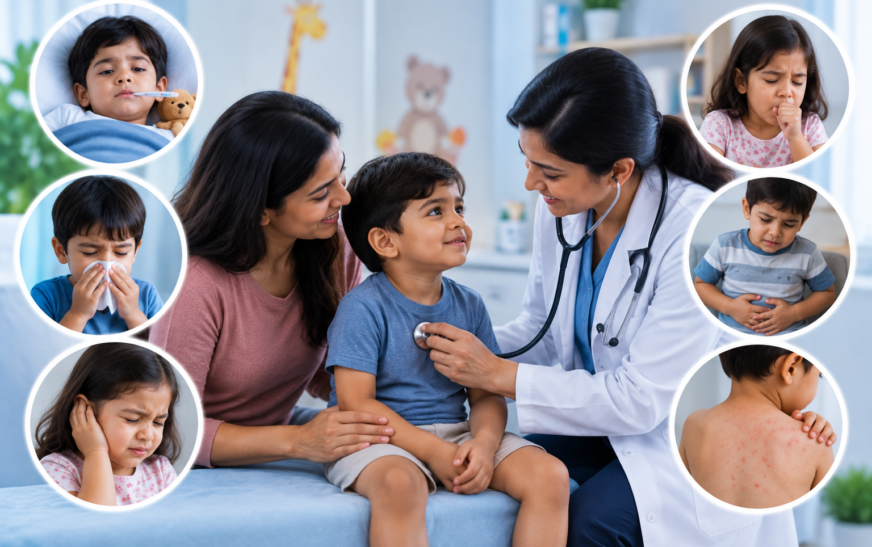
Children commonly experience illnesses as their immune systems develop and they come into contact with new viruses and bacteria. Most childhood illnesses are mild and improve with appropriate home care, but some symptoms require medical evaluation. Knowing the difference between a common illness and a warning sign can help parents respond calmly and seek care when necessary.
Common Childhood Illnesses
Colds and viral infections are among the most common illnesses in children. They may cause a runny or blocked nose, cough, mild fever, sore throat, tiredness, or reduced appetite. Most improve with rest, fluids, and supportive care. Fever can also occur with many childhood infections and is usually a sign that the body is responding to an infection.
Other common conditions include ear infections, sore throats, stomach infections, and viral rashes. Ear infections may cause ear pain, irritability, difficulty sleeping, or temporary hearing changes. Gastrointestinal infections can lead to vomiting, diarrhoea, stomach discomfort, and loss of appetite. Many childhood rashes are associated with viral infections, although some may require medical assessment.
When Should You See a Paediatrician?
Parents should consider consulting a paediatrician when symptoms are persistent, severe, repeatedly returning, or affecting the child’s normal eating, sleeping, playing, or daily activities. Medical advice may also be appropriate when a child has ongoing fever, persistent cough, repeated vomiting or diarrhoea, significant ear pain, unexplained rash, or symptoms that are getting worse instead of improving.
Babies and young children may not always be able to clearly communicate how they feel, so changes in behaviour can be important. A child who becomes unusually sleepy, irritable, weak, or less responsive than normal should be assessed, particularly when these changes occur alongside other symptoms.
Warning Signs That Need Prompt Attention
Certain symptoms require prompt medical care. These include difficulty breathing, bluish or greyish lips or skin, severe dehydration, seizures, unusual confusion or unresponsiveness, severe or worsening pain, or a rapidly spreading rash accompanied by significant illness. A child who is unable to keep fluids down or is passing very little urine may also need urgent assessment.
For infants, particularly very young babies, fever should be discussed with a healthcare professional promptly because infections can sometimes become serious more quickly in this age group.
Helping Children Stay Healthy
Good everyday habits can reduce the spread of many childhood infections and support overall wellbeing. Encourage regular handwashing, nutritious meals, adequate sleep, physical activity, and appropriate vaccinations. Teaching children to cover coughs and sneezes and avoid sharing personal items can also help reduce the spread of infections.
Most childhood illnesses do not lead to serious complications, and parents do not need to panic whenever a child becomes unwell. However, trusting your observations is important. If your child’s condition seems unusual, symptoms are worsening, or you are concerned about their behaviour or breathing, seeking advice from a qualified paediatrician can provide reassurance and ensure appropriate care.
Medical Disclaimer: This article is intended for general health education only and is not a substitute for professional medical diagnosis, treatment, or advice. If a child has severe, rapidly worsening, or concerning symptoms, seek appropriate medical care promptly.