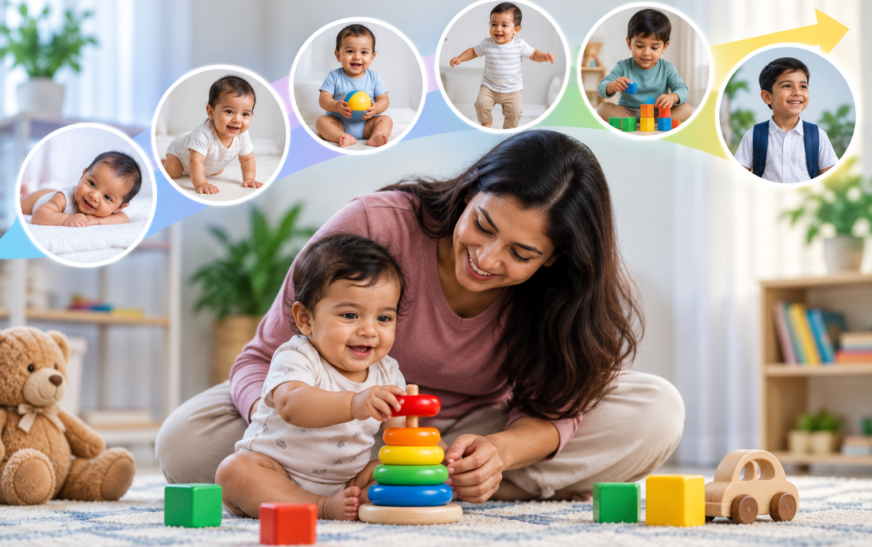
Children grow and develop at their own pace, but certain developmental milestones can help parents understand how a child is progressing. These milestones describe skills that children commonly develop in areas such as movement, communication, learning, social interaction, and independence. Knowing what to look for can help parents support healthy development and recognize when professional advice may be helpful.
Understanding Developmental Milestones
During infancy, children gradually develop skills such as holding their head up, rolling over, sitting, crawling, standing, and eventually walking. They also begin responding to familiar voices, making sounds, smiling socially, and showing interest in people around them. As children grow, their ability to communicate develops from gestures and simple sounds to words and eventually short sentences.
Toddlers commonly become more independent and begin exploring their surroundings actively. They may walk and run, use simple words, follow basic instructions, point to objects they want, and imitate the actions of adults. Between the ages of two and three, many children begin combining words, playing alongside or with other children, following simple routines, and developing better control over everyday activities.
Social, Communication, and Learning Skills
As children enter the preschool years, development becomes increasingly noticeable through language, social interaction, problem-solving, and imagination. Children may begin telling simple stories, asking many questions, identifying colours or shapes, following more complex instructions, and engaging in pretend play. They also gradually learn to share, take turns, express emotions, and interact with other children.
By the early school years, children generally develop greater independence, improved coordination, more advanced language skills, and the ability to follow classroom routines. They may become increasingly capable of completing simple tasks independently, learning new concepts, forming friendships, and expressing their thoughts and feelings.
Every Child Develops Differently
Developmental milestones are general guidelines, not strict deadlines. Some children may reach a particular skill earlier or later than others while still developing normally. However, if a child loses a skill they previously had, shows significant difficulty developing expected abilities, or a parent has concerns about communication, movement, behaviour, hearing, or social interaction, it is important to discuss those concerns with a paediatrician.
Regular well-child visits provide opportunities to monitor growth and development and discuss any concerns. Healthcare professionals may recommend developmental screening or further evaluation when appropriate. Early identification of developmental difficulties can help children access suitable support as soon as possible.
How Parents Can Support Healthy Development
Parents can encourage development through talking, reading, singing, playing, and responding to their child’s interests. Providing opportunities for safe physical activity helps children develop coordination and strength, while age-appropriate games and activities can support language, thinking, and social skills. A healthy routine that includes nutritious food, adequate sleep, regular activity, and positive interaction also supports overall development.
Most importantly, parents do not need to compare their child constantly with others. Pay attention to your child’s individual progress and celebrate new skills as they develop. If something concerns you, trust your observations and speak with a qualified healthcare professional rather than waiting for the concern to resolve on its own.
Medical Disclaimer: This article is intended for general health education only and is not a substitute for professional medical diagnosis, developmental assessment, treatment, or advice. Development varies between children. If you have concerns about your child’s development, consult a qualified paediatrician or healthcare professional.