Ear pain and hearing difficulties are common concerns that can affect children and adults. Sometimes they are caused by temporary problems such as earwax buildup, a cold, or an ear infection. In other cases, persistent hearing changes or pain may indicate an underlying condition that requires medical attention. Understanding common causes can help you recognize when it is appropriate to consult a healthcare professional.
Common Causes of Ear Pain
Ear Infections
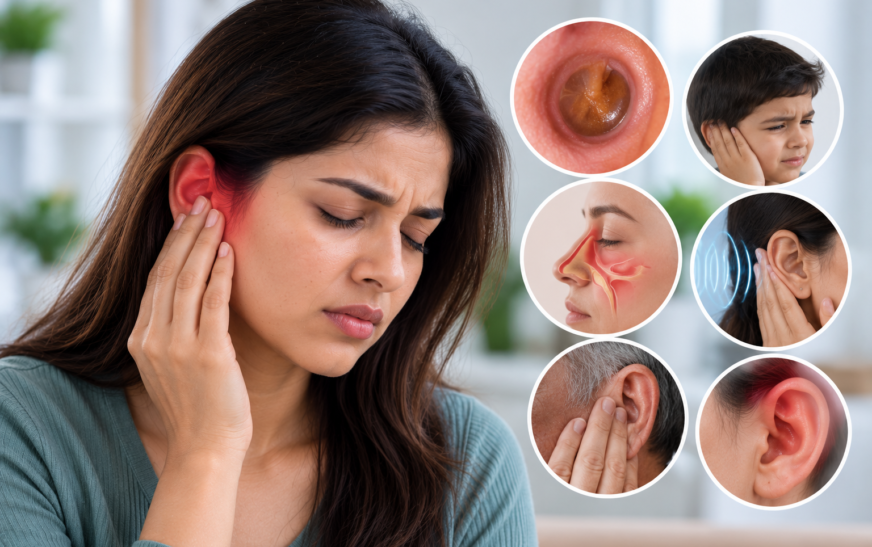
Ear infections are a frequent cause of ear pain, particularly in children. They can affect different parts of the ear and may develop following a cold or respiratory infection. Symptoms can include earache, a feeling of pressure, fever, reduced hearing, or fluid or discharge from the ear.
Treatment depends on the type and cause of the infection. Some infections improve without antibiotics, while others may require medical treatment.
Earwax Buildup
Earwax normally protects the ear canal, but excessive buildup can sometimes block the canal. This may cause ear discomfort, fullness, ringing in the ear, or temporary hearing loss.
Avoid inserting cotton swabs, pins, or other objects into the ear, as these can push wax deeper or injure the ear canal. A healthcare professional can safely assess and remove impacted wax when necessary.
Sinus and Respiratory Problems
Colds, allergies, and sinus congestion can affect the pressure in the middle ear. This may produce ear fullness, popping, pressure, or temporary changes in hearing.
These symptoms often improve as the underlying congestion settles, but persistent or severe symptoms should be evaluated.
Jaw and Dental Problems
Not all pain felt around the ear originates in the ear itself. Problems involving the jaw joint, teeth, or surrounding muscles can sometimes cause pain that feels like an earache. Teeth grinding and jaw clenching may also contribute to discomfort.
A healthcare professional or dentist can help determine the source when ear examination does not explain the pain.
Common Causes of Hearing Problems
Hearing changes can occur for many reasons. Age-related hearing loss is common as people get older and usually develops gradually. Long-term exposure to loud sounds can also damage the delicate structures involved in hearing.
Other possible causes include:
- Earwax blockage
- Ear infections
- Fluid behind the eardrum
- Certain medications
- Injury to the ear
- Problems affecting the inner ear
- Sudden changes in pressure
- Age-related changes in hearing
Hearing loss may affect one or both ears and can develop gradually or suddenly.
When Should You See an ENT Specialist?
Persistent ear pain or hearing changes should be assessed by a qualified healthcare professional, particularly if symptoms interfere with communication or daily activities.
Seek prompt medical attention for sudden hearing loss, especially if it develops over a short period or affects one ear. Other symptoms that warrant medical assessment include severe ear pain, significant dizziness, persistent ringing, blood or fluid coming from the ear, swelling around the ear, or symptoms following a significant injury.
Children should also be evaluated when they repeatedly complain of ear pain, have difficulty hearing, experience frequent ear infections, or show changes in speech or communication that may be related to hearing difficulties.
Protecting Your Ear Health
Simple habits can help protect your ears and hearing:
- Keep the volume at a safe level when using headphones or earbuds.
- Take breaks from prolonged exposure to loud sounds.
- Use appropriate hearing protection in noisy environments.
- Do not insert objects into the ear canal.
- Follow recommended treatment for ear infections and other conditions.
- Have persistent hearing changes assessed rather than ignoring them.
Listen to Changes in Your Ears
Ear pain and hearing problems can have many different causes, and symptoms alone may not reveal the underlying problem. Early evaluation of persistent or sudden symptoms can help identify the cause and guide appropriate treatment.
If you notice a significant change in hearing, ongoing ear pain, discharge, severe dizziness, or other unusual symptoms, consult a qualified ENT specialist or healthcare professional.
Medical Disclaimer: This article is intended for general health education only and is not a substitute for professional medical diagnosis, treatment, or personalized advice. Sudden hearing loss, severe ear pain, significant dizziness, or symptoms following an ear injury require prompt medical assessment.