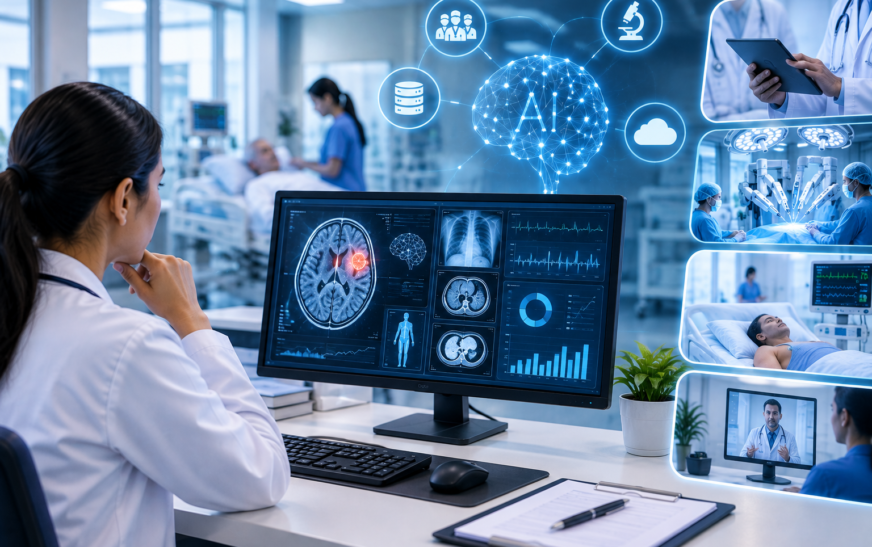
Hospitals are becoming increasingly connected environments.
From digital patient records to connected medical equipment, technology is changing how hospitals operate.
What Is a Smart Hospital?
A smart hospital uses connected technologies and data-driven systems to improve clinical, administrative, and operational processes.
Technologies may include:
- IoT devices
- Artificial intelligence
- Connected medical equipment
- Digital patient records
- Automated workflows
- Real-time analytics
- Smart infrastructure
Improving Patient Flow
Hospital technology can help organizations manage appointments, admissions, beds, diagnostics, and discharge processes.
Better coordination can help reduce unnecessary delays.
Connected Medical Equipment
Medical devices can increasingly communicate with hospital systems.
This can help healthcare teams access relevant measurements and equipment information more efficiently.
Automation
Automation can support repetitive operational processes such as inventory management, scheduling, documentation, and facility monitoring.
Data-Driven Decisions
Hospitals generate enormous amounts of data.
Analytics platforms can help organizations understand patterns in patient flow, equipment utilization, operational performance, and other areas.
The Future of Hospitals
The smart hospital is not simply a building filled with technology.
It is an integrated environment where technology supports healthcare professionals and improves the overall patient experience.