

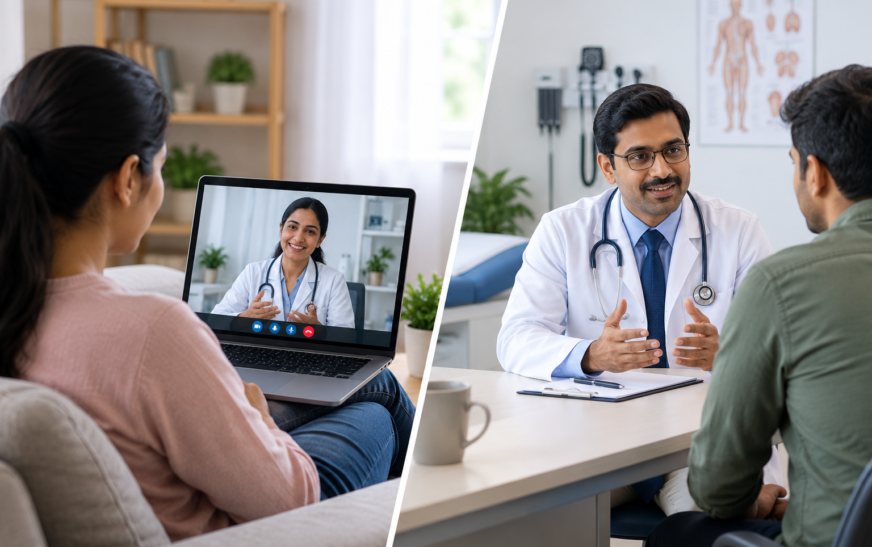
The traditional healthcare consultation usually requires a patient to travel to a clinic or hospital and meet a doctor in person. Telemedicine introduces another option: consulting healthcare professionals remotely through digital technology.
Neither approach is universally better. The appropriate choice depends on the patient’s condition and the purpose of the consultation.
When Telemedicine Can Be Useful
Telemedicine can be particularly useful for:
- Follow-up consultations
- Medication discussions
- Reviewing laboratory or imaging reports
- General health discussions
- Certain minor illnesses
- Chronic disease follow-ups
- Mental health consultations
- Specialist consultations when physical examination is not immediately necessary
When an In-Person Visit May Be Better
Some medical situations require physical examination, diagnostic procedures, or immediate treatment.
For example, a doctor may need to physically examine an injury, perform a procedure, collect a sample, or assess symptoms that cannot be adequately evaluated remotely.
Emergency symptoms should also be handled through appropriate emergency medical services rather than waiting for a routine telemedicine appointment.
Convenience and Accessibility
One of telemedicine’s major strengths is convenience.
A patient who needs a short follow-up consultation may not need to spend several hours travelling and waiting at a clinic.
For people in remote locations, telemedicine can also provide access to specialists who may otherwise be difficult to reach.
The Importance of Digital Security
Because telemedicine involves sensitive health information, healthcare providers need appropriate privacy and security practices.
Patients should use trusted healthcare platforms and avoid discussing sensitive medical information through unsecured channels.
Finding the Right Balance
The future of healthcare is unlikely to be purely digital or purely physical.
Instead, healthcare providers can use telemedicine when remote care is appropriate while maintaining in-person services when physical examination, procedures, or urgent treatment are required.
This hybrid approach can give patients greater flexibility while allowing healthcare professionals to choose the most appropriate method of care.


