
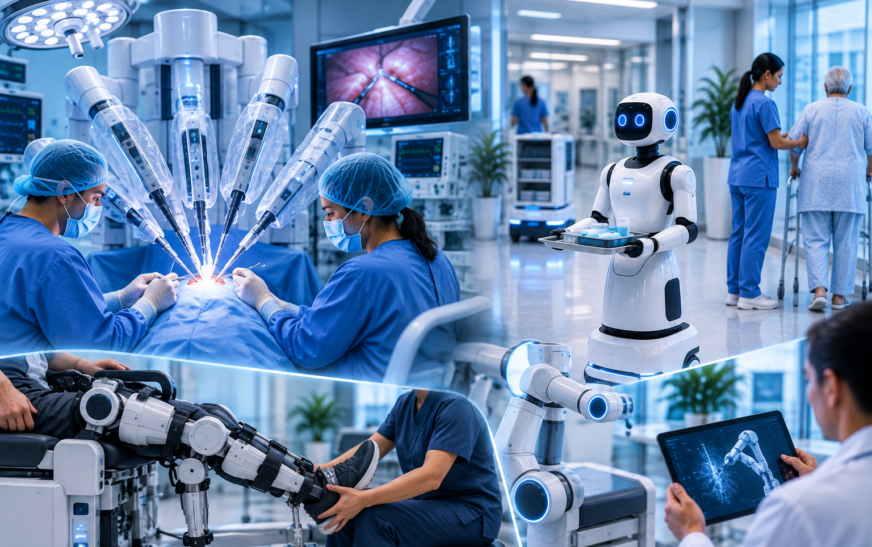
The Growing Role of Robotics in Modern Healthcare

Robotics is changing several areas of healthcare. Medical robots can assist with surgery, rehabilitation, logistics, diagnostics, and other specialized applications. Surgical Robotics Surgical robotic systems can provide surgeons with sophisticated instruments and enhanced control during selected procedures. These systems do not independently replace surgeons. Rehabilitation Robotics Robotic technologies can assist
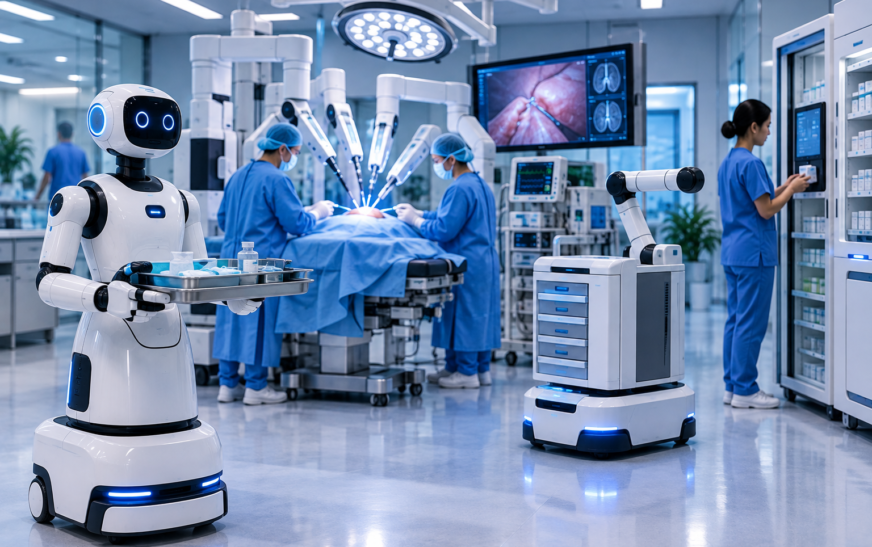
Robotics and Automation in Modern Hospitals
Robotics and automation are becoming increasingly common in healthcare environments. They can assist healthcare professionals with tasks ranging from logistics to surgery. Hospital Logistics Robotic systems can potentially transport: This can reduce the need for staff to spend time on repetitive transportation tasks. Surgical Robotics Robotic surgical systems can provide

Internet of Things in Hospitals: Connecting Healthcare Devices
The Internet of Things (IoT) is increasingly becoming part of modern healthcare. In hospitals, connected devices can communicate with software systems and generate information that supports clinical and operational processes. Examples of Healthcare IoT Hospital IoT applications may include: Tracking Medical Equipment Hospitals often have large inventories of expensive equipment.

How Technology Is Creating Smarter Hospitals
Hospitals are becoming increasingly connected environments. From digital patient records to connected medical equipment, technology is changing how hospitals operate. What Is a Smart Hospital? A smart hospital uses connected technologies and data-driven systems to improve clinical, administrative, and operational processes. Technologies may include: Improving Patient Flow Hospital technology can
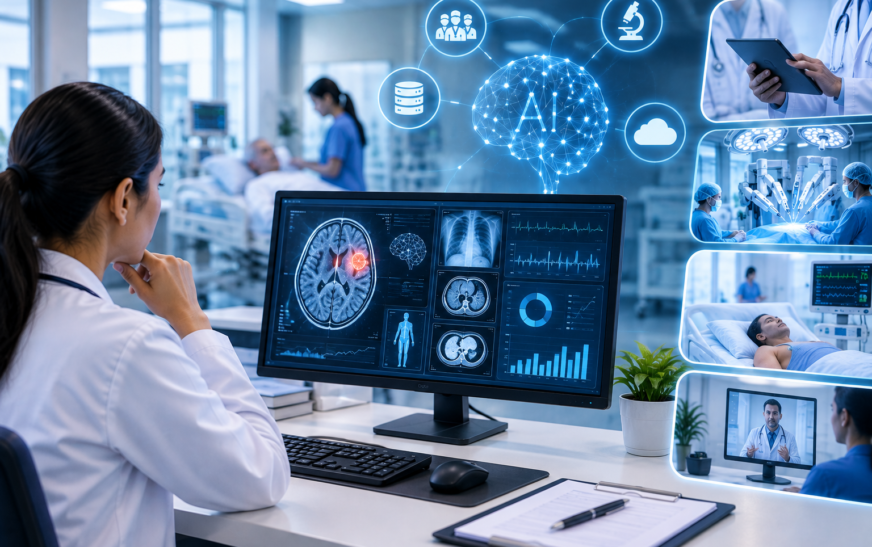
Artificial Intelligence in Healthcare Software: Opportunities and Challenges
Artificial intelligence is becoming increasingly visible in healthcare software. AI can analyze large datasets, identify patterns, automate certain tasks, and assist healthcare professionals in various workflows. Where AI Can Help Potential applications include: Reducing Administrative Work Healthcare professionals spend significant time on documentation and administrative tasks. AI-powered software may help

Why Healthcare Software Integration Matters
A hospital may use many different software systems. If those systems operate independently, healthcare professionals may have difficulty accessing complete information. This is why healthcare software integration is so important. What Is Integration? Integration allows different healthcare systems to exchange information. For example, a laboratory system may communicate relevant results
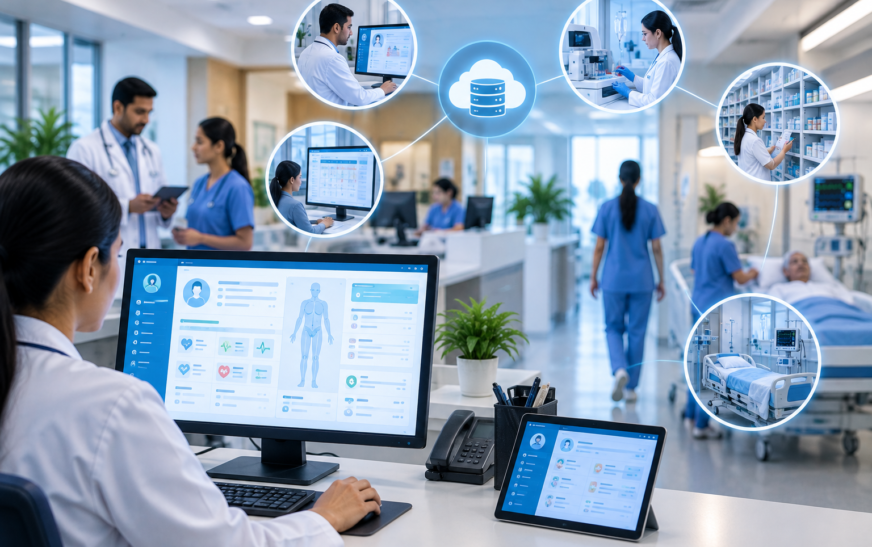
How Healthcare Software Is Transforming Hospital Operations
Healthcare organizations generate enormous amounts of information every day. Healthcare software helps organizations manage clinical information, administrative processes, communication, scheduling, billing, and many other activities. Types of Healthcare Software Healthcare organizations may use: Improving Information Access Digital systems can make relevant patient information available to authorized healthcare professionals when needed.
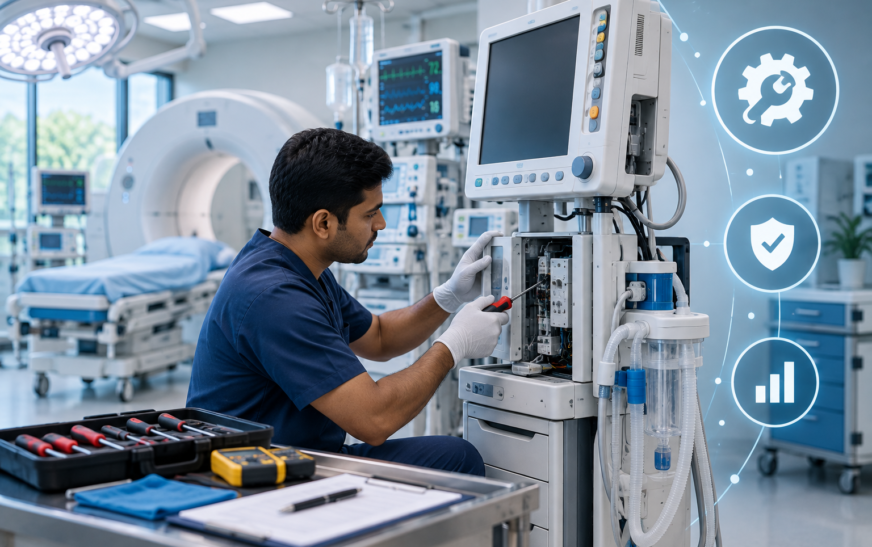
Preventive Maintenance: The Key to Reliable Medical Equipment
Medical equipment plays a critical role in healthcare facilities. A malfunctioning device can interrupt clinical workflows and potentially affect patient care. That is why preventive maintenance is essential. What Is Preventive Maintenance? Preventive maintenance involves planned inspections, servicing, calibration, testing, and other activities intended to keep equipment functioning properly. Why
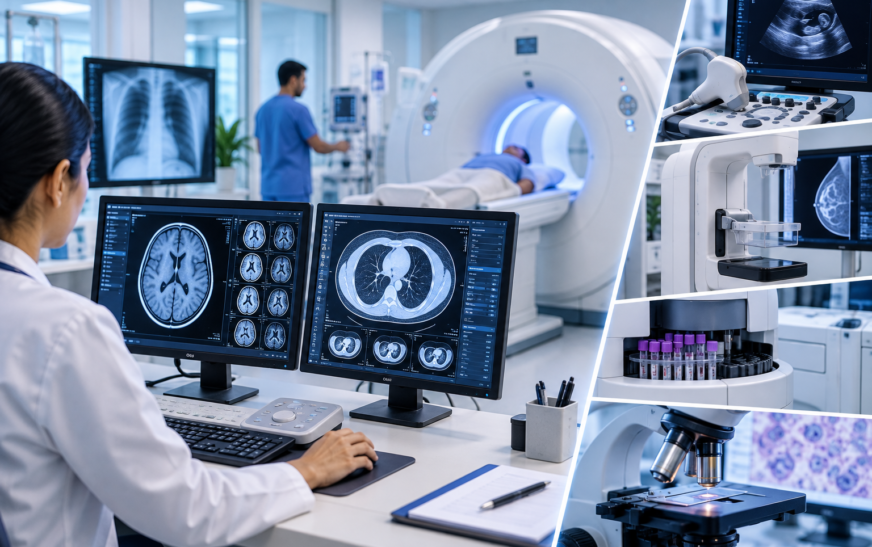
How Advanced Diagnostic Equipment Supports Early Detection
Early detection can play an important role in healthcare. Modern diagnostic equipment provides healthcare professionals with increasingly sophisticated ways to identify and evaluate medical conditions. The Importance of Accurate Diagnosis A healthcare professional’s clinical assessment may be supported by laboratory tests, imaging, physiological measurements, and other diagnostic information. Better-quality diagnostic

The Evolution of Modern Medical Equipment
Medical equipment has progressed from relatively simple mechanical instruments to sophisticated digital systems capable of collecting, processing, and sharing information. Modern hospitals depend on equipment for diagnosis, monitoring, treatment, surgery, and patient care. Diagnostic Equipment Diagnostic equipment helps healthcare professionals understand a patient’s condition. Examples include: Equipment in Patient Monitoring
About the Author
Dr. Priya Nair MBBS, MD (Internal Medicine) Consultant Physician & Health Writer
Dr. Priya Nair is an experienced physician with over 12 years of clinical practice in internal medicine. She is passionate about preventive healthcare and believes in the power of lifestyle changes to build a healthier community.

