Recovery after injury, surgery, stroke, or neurological conditions can require repeated physical therapy and rehabilitation.
Robotics is increasingly being explored as a tool to support rehabilitation programs.
What Is Rehabilitation Robotics?
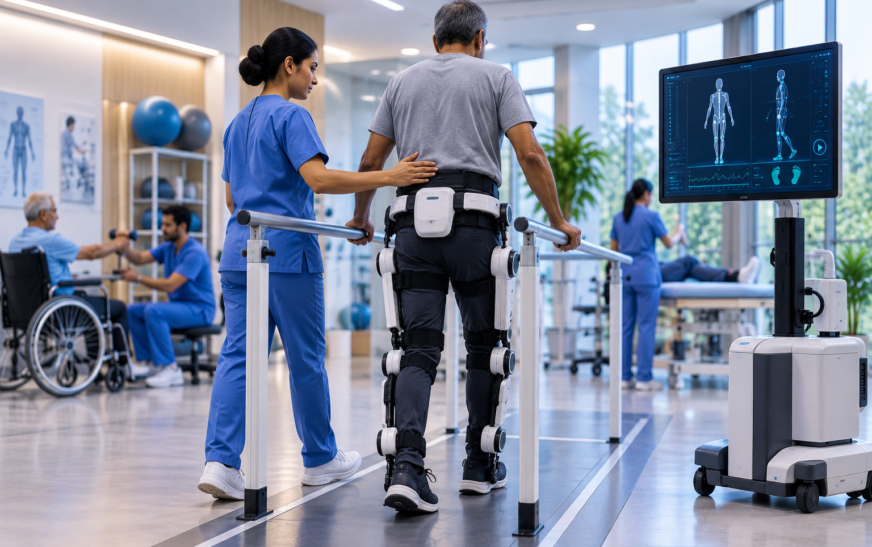
Rehabilitation robots are technologies designed to assist patients with controlled movements or repetitive therapeutic exercises.
Depending on the device, robotics may support:
- Walking
- Arm movement
- Hand rehabilitation
- Balance training
- Repetitive exercises
Why Repetition Matters
Rehabilitation often requires patients to repeat specific movements many times.
Robotic systems can assist with repetitive exercises while allowing therapists to monitor progress.
Supporting Therapists
Robots are generally tools used alongside healthcare professionals.
A therapist can determine appropriate exercises and adjust therapy based on the patient’s needs.
Data Collection
Some robotic rehabilitation systems can collect information about movement and performance.
This may provide therapists with additional information when evaluating progress.
Limitations
Robotic rehabilitation is not suitable for every patient.
Cost, availability, clinical suitability, and the patient’s individual condition must all be considered.
The Future of Rehabilitation
As robotics becomes more sophisticated, rehabilitation systems may become increasingly personalized and capable of adapting exercises to individual patient needs.