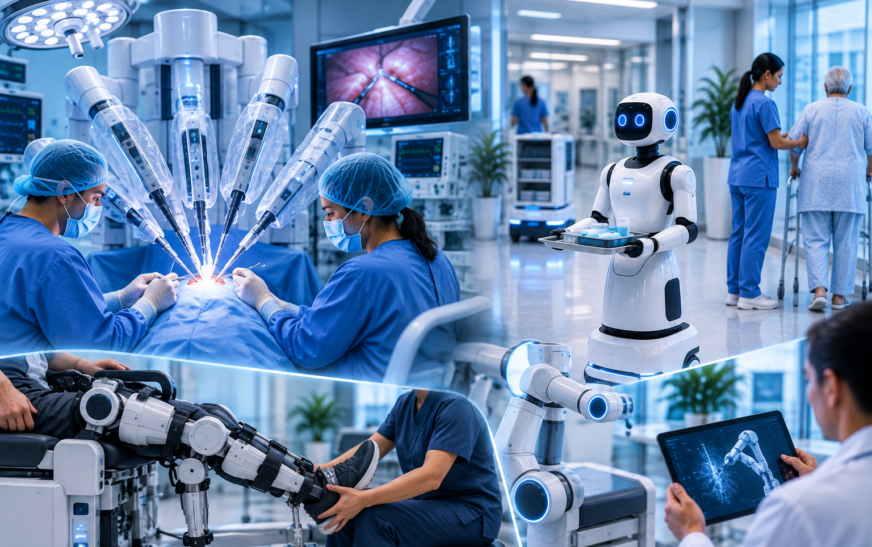
Robotic surgery is one of the most visible applications of medical robotics.
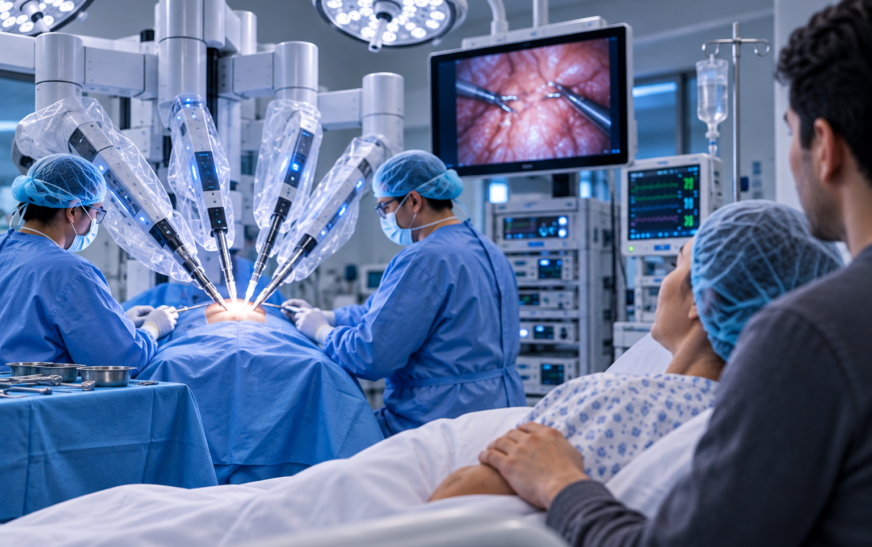
It uses specialized robotic systems controlled by surgeons to perform certain surgical procedures.
Is the Robot Performing the Surgery?
A common misconception is that the robot independently performs surgery.
In many robotic surgical systems, the surgeon controls the instruments through a specialized console or interface.
The robotic system translates the surgeon’s movements into precise instrument movements.
Potential Advantages
Depending on the procedure and system, robotic surgery may offer features such as:
- Precise instrument control
- Small surgical instruments
- Enhanced visualization
- Flexible instrument movement
- Ergonomic advantages for surgeons
Not Every Surgery Requires Robotics
Robotic surgery is not automatically the best choice for every patient or procedure.
The appropriate approach depends on factors such as the patient’s condition, procedure, surgeon expertise, available technology, and clinical considerations.
Training Is Essential
Robotic surgery requires specialized training.
Surgeons and operating-room teams need to understand both the clinical procedure and the technology.
Looking Ahead
Robotic surgery is likely to continue evolving as imaging, AI, sensors, and surgical technologies become more advanced.
The primary objective remains improving surgical care and patient outcomes.